
Myadel Regional
Executive Committee

30 December 2025
The Minsk region is rising to the top of the agricultural sector and raising the bar for the entire country in 2026
The Minsk Region once again highlighted the results of the year not through dry reports, but through figures that reflect the region’s real work and character. The opening of an innovative dairy complex in the Kletsk District became an occasion not only for congratulations, but also for an honest conversation about what defines the agricultural Minsk Region today.
At the opening of the innovative dairy complex in the Kletsk District, Chairman of the Minsk Regional Executive Committee Alexei Kushnarenko highlighted the agricultural achievements of the Minsk Region.

Milk as a strategy
Milk here has long ceased to be merely a product. In 2025, the region plans to produce 2.3 million tonnes — and this is not abstract statistics, but the result of a systematic transformation of agricultural enterprises. The average milk yield is approaching 7,100 kg per cow, while in some districts cows confidently exceed the mark of 9,000 kg and more. The Nesvizh and Smolevichi districts are already playing in the “major league,” where the count goes not by hundreds, but by tonnes.

Next-generation farms are already the norm
Behind these records are next-generation farms. Modern dairy complexes have become the norm for the region rather than an exception. They produce the lion’s share of milk and set the pace for the entire industry. Old tie-stall farms are gradually becoming a thing of the past, giving way to bright facilities, automation, and proper conditions for animals. Agriculture here is looking less and less like an image fr om the past and more and more like an orderly, technology-driven business.
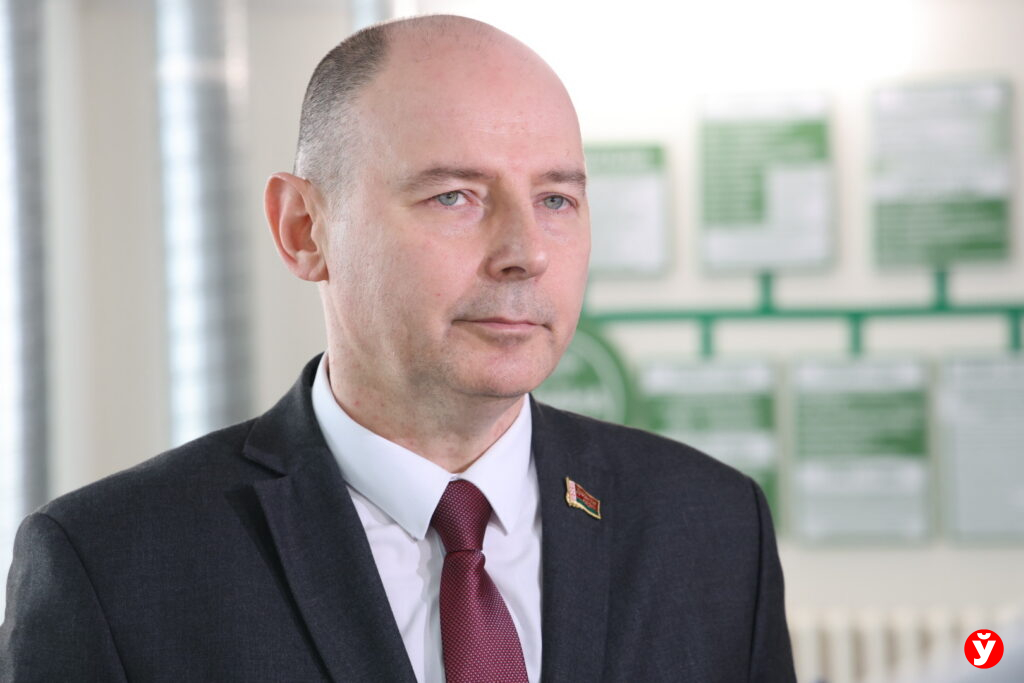
— This year alone, we are commissioning 20 new facilities, and in the next five-year period we plan to build another 55 complexes and farms in order to fully phase out tie-stall housing for livestock. In addition, this affects livestock survival rates: in 2025, we reduced livestock mortality by 13.5%, — noted Alexei Kushnarenko.
Livestock farming and oversight
But the Minsk Region is not sustained by milk alone. Fattening cattle are steadily gaining weight, and in some districts daily weight gains look almost athletic. There are challenges as well — agriculture cannot exist without them — but they are not ignored: oversight is being strengthened, veterinarians are involved, and solutions are being sought at both district and regional levels.


A productive year for the fields
The fields also produced abundant harvests this year. More than 2.7 million tonnes of grain, record yields, the country’s best rapeseed crop, strong harvests of corn and sugar beets — the Minsk Region once again confirmed its status as the country’s leading grain-producing region. Processing plants are operating at capacity, feed supplies have been prepared, and agricultural enterprises are entering winter without stress or emergency measures.
A region that delivers results
As a result, a picture emerges of a region that does not rely on grand words, but works steadily and persistently to achieve results. The Minsk Region today is not about nostalgia for the rural past, but about confident progress, wh ere land, technology, and people speak the same language.
Governor of the Minsk Region Alexei Kushnarenko recalled the President’s instruction to preserve rural communities.
— By creating such dairy complexes and farms, where all the necessary conditions are in place, we are essentially linking people to their jobs and to the land where they live and work, while also preserving small settlements, — emphasized the head of the central region.