

Myadel Regional
Executive Committee
28 August 2025
What will happen to the kindergarten whose closure story reached Lukashenko
The kindergarten in the agrotown of Gorshchevshchina, Tolochin District, Vitebsk Region, will remain open. Earlier, local residents appealed to the head of state through social media, asking not to close the institution even though it is attended by very few children. The issue was studied in detail, and it was ultimately decided to preserve the kindergarten, Vitebsk Regional Executive Committee Chairman Alexander Subbotin told journalists, BELTA’s correspondent reports.
https://youtu.be/HqaGPilkbl4?si=wjc96CgNy0ajfeUm
The head of the region explained that local authorities, together with the Ministry of Education, periodically optimise educational institutions. This is due, among other things, to economic considerations: if the number of pupils becomes very small, maintaining, for example, a school becomes too costly. It is more efficient to organise transport for children to neighbouring localities. For example, in the Vitebsk Region, 15 kindergartens and around 7 schools were closed this way this year. A similar approach is used throughout the country. However, many factors are certainly taken into account, including the interests of children and parents. Strict criteria have been established for making such decisions.
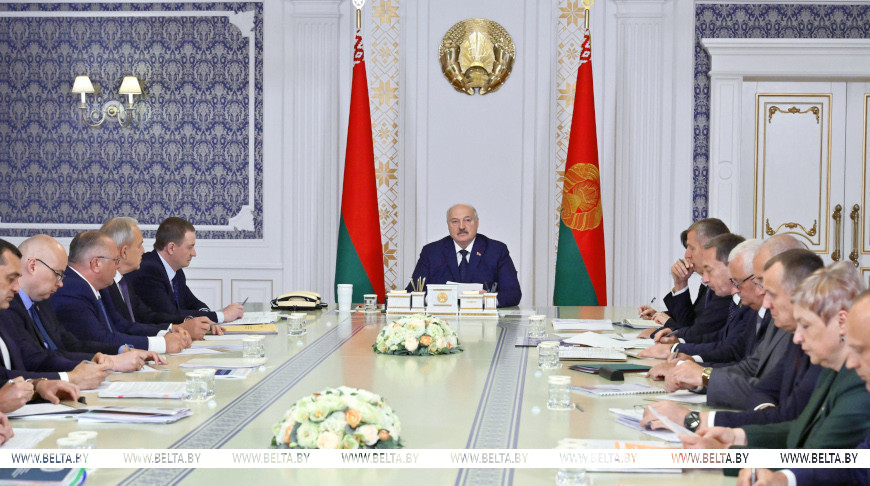
Alexander Lukashenko learned about this appeal and instructed officials to thoroughly investigate the situation. The head of state cited the story of this kindergarten at a meeting on the effectiveness of the public retail service system nationwide as an example of how carefully the optimisation of socially significant rural facilities must be approached. “Will a dairy worker take three- or four-year-old children 7–10 km to kindergarten? Have you gone mad? Can’t you see this? Send your own grandchild or four-year-old child to that kindergarten miles away! It’s unbelievable!” the head of state asked rhetorically.

After an additional review of the issue concerning the kindergarten in the agrotown of Gorshchevshchina, it was decided to keep it open. “The President requires a more thorough approach to every case,” Alexander Subbotin pointed out. “After all, we are fighting for staffing policy in rural areas, and where people are working, exceptions must be made and facilities must be preserved. This case is illustrative. The kindergarten will remain open. At the same time, 21 children from this very village are transported to a neighbouring village for school. Therefore, at least the kindergarten will remain in this village, while the school will be in the neighbouring one, in order to preserve these localities.”